寒
| ||||||||
Translingual
Han character
寒 (Kangxi radical 40, 宀+9, 12 strokes, cangjie input 十廿金卜 (JTCY), four-corner 30303, composition ⿱𡨄⺀(GTJV) or ⿱𡨄冫(K))
References
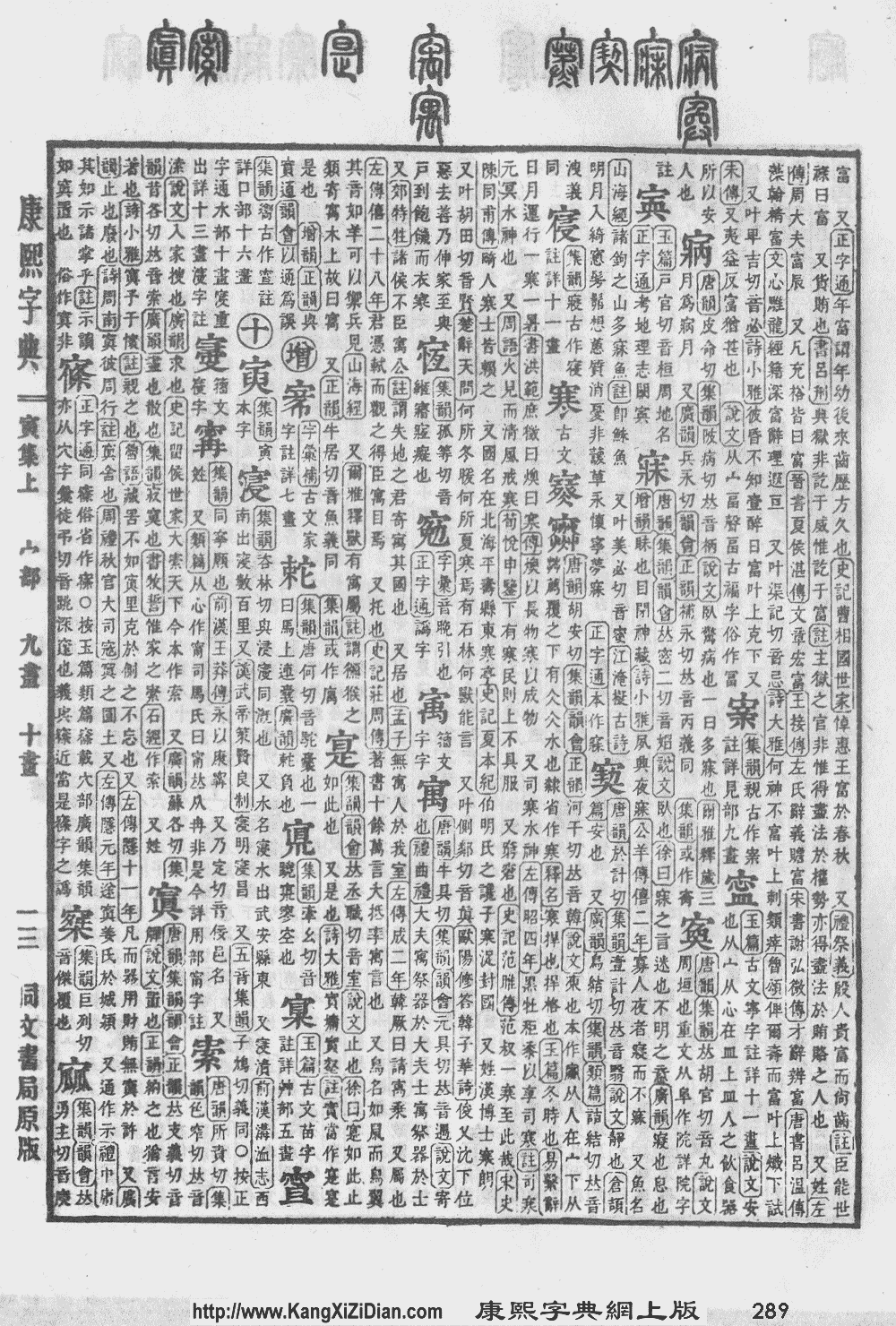
- Kangxi Dictionary: page 289, character 9
- Dai Kanwa Jiten: character 7239
- Dae Jaweon: page 572, character 10
- Hanyu Da Zidian (first edition): volume 2, page 941, character 6
- Unihan data for U+5BD2
Chinese
Lua error in Module:utilities at line 142: attempt to perform arithmetic on local 'h' (a nil value)
Glyph origin
| Historical forms of the character 寒 | ||
|---|---|---|
| Western Zhou | Shuowen Jiezi (compiled in Han) | Liushutong (compiled in Ming) |
| Bronze inscriptions | Small seal script | Transcribed ancient scripts |
 |
 |
 |
Ideogrammic compound (會意/会意) : 宀 (“house”) + 人 (“person”) + 茻 (“grass”) – a person in a house, sleeping in the grass to protect from the cold. In some bronze inscriptions, 二 is added at the bottom of the character; this may simply be decorative or may represent a mat. In the seal script, 二 is changed to 仌 (“ice”) to emphasize its meaning of coldness.
Contrast 宿.
Etymology
Unknown (Schuessler, 2007).
Pronunciation
Definitions
寒
- cold; wintry; chilly
- poor; poverty-stricken
- humble; petty and low
- desolate; deserted
- dreary; miserable
- withered; limp
- (humble) my
- 寒舍 ― hánshè ― (one's own) humble home
- to feel cold
- to fear; to dread
- winter
- cold weather; cold day or night
- (traditional Chinese medicine) cold; chill
- (~日) (telegraphy) the fourteenth day of a month
Synonyms
- (cold): 冷 (lěng)
Lua error in Module:utilities at line 142: attempt to perform arithmetic on local 'h' (a nil value)
Compounds
- 一寒如此
- 一暴十寒 (yīpùshíhán)
- 一曝十寒 (yīpù-shíhán)
- 不寒而慄/不寒而栗 (bùhán'érlì)
- 不寒而栗 (bùhán'érlì)
- 中寒
- 乍寒乍熱/乍寒乍热
- 乍暖還寒/乍暖还寒 (zhànuǎnhuánhán)
- 令人心寒
- 偷寒送暖
- 傷寒/伤寒 (shānghán)
- 傷寒論/伤寒论
- 內寒/内寒
- 再寒暑
- 冱寒
- 凍寒/冻寒
- 凝寒
- 別後寒溫/别后寒温
- 北寒帶/北寒带 (Běihándài)
- 十年寒窗
- 十載寒窗/十载寒窗
- 受寒 (shòuhán)
- 問寒問暖/问寒问暖 (wènhánwènnuǎn)
- 單寒/单寒
- 啼飢號寒/啼饥号寒 (tíjīháohán)
- 噓寒問暖/嘘寒问暖 (xūhánwènnuǎn)
- 噤若寒蟬/噤若寒蝉 (jìnruòhánchán)
- 嚴寒/严寒 (yánhán)
- 大寒 (Dàhán)
- 天寒
- 天寒地凍/天寒地冻 (tiānhándìdòng)
- 嫩寒
- 嬌寒/娇寒
- 孤寒 (gūhán)
- 家寒
- 家道貧寒/家道贫寒
- 寒不擇衣/寒不择衣
- 寒乞
- 寒事
- 寒人
- 寒來暑往/寒来暑往
- 寒俊
- 寒假 (hánjià)
- 寒傖/寒伧 (hánchen)
- 寒傖相/寒伧相
- 寒光
- 寒具
- 寒冬 (hándōng)
- 寒冬臘月/寒冬腊月 (hándōnglàyuè)
- 寒冷 (hánlěng)
- 寒厥
- 寒噤 (hánjìn)
- 寒地訓練/寒地训练
- 寒垣
- 寒塵/寒尘
- 寒士 (hánshì)
- 寒天 (hántiān)
- 寒女
- 寒官
- 寒害
- 寒家
- 寒山 (hánshān)
- 寒山子
- 寒山寺
- 寒峭
- 寒帶/寒带 (hándài)
- 寒帶氣候/寒带气候
- 寒微 (hánwēi)
- 寒微簡陋/寒微简陋
- 寒心 (hánxīn)
- 寒心酸鼻
- 寒怯
- 寒意 (hányì)
- 寒慄/寒栗
- 寒慘慘/寒惨惨
- 寒戰/寒战 (hánzhàn)
- 寒抖抖
- 寒星
- 寒暑 (hánshǔ)
- 寒暑推移
- 寒暑表 (hánshǔbiǎo)
- 寒暄 (hánxuān)
- 寒暄書/寒暄书
- 寒暖色
- 寒木春華/寒木春华
- 寒林 (hánlín)
- 寒梅 (hánméi)
- 寒森森
- 寒武系
- 寒武紀/寒武纪 (Hánwǔ Jì)
- 寒毛 (hánmáo)
- 寒毛直豎/寒毛直竖
- 寒氈一席/寒毡一席
- 寒氣/寒气 (hánqì)
- 寒氣襲人/寒气袭人
- 寒氣逼人/寒气逼人
- 寒沍
- 寒泉之思
- 寒流 (hánliú)
- 寒浞
- 寒涼/寒凉 (hánliáng)
- 寒溫/寒温
- 寒溫序/寒温序
- 寒潮 (háncháo)
- 寒灰
- 寒熱/寒热 (hánrè)
- 寒燠
- 寒玉
- 寒璧
- 寒瓜
- 寒畯
- 寒症
- 寒痹
- 寒瘧/寒疟
- 寒盟
- 寒相
- 寒砧
- 寒磣/寒碜 (hánchen)
- 寒禁
- 寒秋
- 寒窗 (hánchuāng)
- 寒第
- 寒粟子
- 寒素
- 寒羞
- 寒耕暑耘
- 寒耕熱耘/寒耕热耘
- 寒肅/寒肃
- 寒腿 (hántuǐ)
- 寒舍 (hánshè)
- 寒色 (hánsè)
- 寒花晚節/寒花晚节
- 寒苦
- 寒荊/寒荆
- 寒著 (hòn-tó)
- 寒薄
- 寒號蟲/寒号虫 (hánháochóng)
- 寒蛩
- 寒蜩
- 寒螿/寒螀
- 寒蟬/寒蝉 (hánchán)
- 寒蟬仗馬/寒蝉仗马
- 寒蠢
- 寒衣
- 寒衣節/寒衣节
- 寒訓/寒训
- 寒證/寒证
- 寒賤/寒贱
- 寒酸 (hánsuān)
- 寒酸措大
- 寒門/寒门 (hánmén)
- 寒門飲恨/寒门饮恨
- 寒霜
- 寒露 (Hánlù)
- 寒顫/寒颤 (hánzhàn)
- 寒風/寒风 (hánfēng)
- 寒風刺骨/寒风刺骨
- 寒風砭骨/寒风砭骨
- 寒飆/寒飙
- 寒食 (hánshí)
- 寒食節/寒食节 (Hánshíjié)
- 寒鴉/寒鸦 (hányā)
- 小寒 (Xiǎohán)
- 小寒食
- 屍骨早寒/尸骨早寒
- 屍骨未寒/尸骨未寒 (shīgǔwèihán)
- 島瘦郊寒/岛瘦郊寒
- 廣寒/广寒 (guǎnghán)
- 廣寒仙子/广寒仙子
- 廣寒宮/广寒宫 (Guǎnghángōng)
- 心如寒灰
- 心寒 (xīnhán)
- 心寒膽戰/心寒胆战
- 心寒膽碎/心寒胆碎
- 心寒膽落/心寒胆落
- 心膽俱寒/心胆俱寒
- 心驚膽寒/心惊胆寒
- 惡寒/恶寒
- 打寒
- 打寒噤
- 打寒戰/打寒战 (dǎhánzhàn)
- 斑疹傷寒/斑疹伤寒 (bānzhěn shānghán)
- 易水寒
- 春寒料峭
- 暑來寒往/暑来寒往
- 暑往寒來/暑往寒来
- 暖寒會/暖寒会
- 枕冷衾寒
- 歇寒 (hioh-kôaⁿ) (Min Nan)
- 歲寒/岁寒 (suìhán)
- 歲寒三友/岁寒三友 (suìhánsānyǒu)
- 歲寒不凋/岁寒不凋
- 歲寒松柏/岁寒松柏
- 沁寒
- 消寒圖/消寒图
- 消寒會/消寒会
- 清寒 (qīnghán)
- 清寒子弟
- 漠漠寒
- 濟寒賑貧/济寒赈贫
- 燠寒
- 發脾寒/发脾寒
- 白屋寒門/白屋寒门
- 盛暑祁寒
- 盪寒/荡寒
- 破膽寒心/破胆寒心
- 祁寒
- 祁寒暑雨
- 祁寒溽暑
- 祛寒
- 禦寒/御寒 (yùhán)
- 秋月寒江
- 耐寒 (nàihán)
- 脣亡齒寒/唇亡齿寒 (chúnwángchǐhán)
- 脾寒
- 腸傷寒/肠伤寒
- 膽寒/胆寒 (dǎnhán)
- 膽戰心寒/胆战心寒
- 膽破心寒/胆破心寒
- 膽顫心寒/胆颤心寒
- 自同寒蟬/自同寒蝉
- 芒寒色正
- 苦寒 (kǔhán)
- 苦寒行
- 薄祚寒門/薄祚寒门
- 號寒啼飢/号寒啼饥 (háohántíjī)
- 衾寒枕冷
- 貧寒/贫寒 (pínhán)
- 貧寒出身/贫寒出身
- 輕寒/轻寒
- 送暖偷寒
- 避寒 (bìhán)
- 郊寒島瘦/郊寒岛瘦
- 酸寒
- 酷寒
- 陰勝則寒/阴胜则寒
- 陰寒/阴寒
- 隆寒
- 顛寒作熱/颠寒作热
- 風寒/风寒 (fēnghán)
- 風寒紗縵/风寒纱缦
- 飢寒/饥寒 (jīhán)
- 飢寒交切/饥寒交切
- 飢寒交迫/饥寒交迫 (jīhánjiāopò)
- 骨肉未寒
- 高寒
Further reading
- “Entry #8312”, in 臺灣閩南語常用詞辭典 [Dictionary of Frequently-Used Taiwan Minnan] (in Chinese and Min Nan), Ministry of Education, R.O.C., 2023.
Japanese
| Shinjitai | 寒 | |
| Kyūjitai [1] |
寒󠄁 寒+ 󠄁?(Adobe-Japan1) |
 |
| 寒󠄃 寒+ 󠄃?(Hanyo-Denshi) (Moji_Joho) | ||
| The displayed kanji may be different from the image due to your environment. See here for details. | ||
Readings
Etymology
| Kanji in this term |
|---|
| 寒 |
| かん Grade: 3 |
| kan’on |
From Middle Chinese 寒 (MC han).
The basic cold sense as an affix is attested from some of the earliest texts in the 700s CE.[2] Use as an independent noun is first attested in a text from roughly 900 CE.[2]
Pronunciation
Affix
寒 • (kan)
Derived terms
Noun
寒 • (kan)
References
- 1914, 漢和大辭書 (Kanwa Dai Jisho, “The Great Kanji-Japanese Dictionary”) (in Japanese), page 685 (paper), page 392 (digital), Tōkyō: 興文社 (Kōbunsha)
- 1988, 国語大辞典(新装版) (Kokugo Dai Jiten, Revised Edition) (in Japanese), Tōkyō: Shogakukan
- 2006, 大辞林 (Daijirin), Third Edition (in Japanese), Tōkyō: Sanseidō, →ISBN
- 1998, NHK日本語発音アクセント辞典 (NHK Japanese Pronunciation Accent Dictionary) (in Japanese), Tōkyō: NHK, →ISBN
Korean
Etymology
From Middle Chinese 寒 (MC han). Recorded as Middle Korean 한 (han) (Yale: han) in Hunmong Jahoe (訓蒙字會 / 훈몽자회), 1527.
Compounds
- 오한 (惡寒, ohan)
- 한랭 (寒冷, hallaeng)
- 혹한 (酷寒, hokhan)
- 한심 (寒心, hansim, “miserableness”)
Vietnamese
References
- Nguyễn (2014).
- Nguyễn et al. (2009).
- Trần (2004).
- Bonet (1899).
- Génibrel (1898).
- Taberd & Pigneau de Béhaine (1838).