U+4F0E, 伎
CJK UNIFIED IDEOGRAPH-4F0E

[U+4F0D]
CJK Unified Ideographs
[U+4F0F]

Translingual

Han character

(Kangxi radical 9, +4, 6 strokes, cangjie input 人十水 (OJE), four-corner 24247, composition )

Derived characters

  • 𩛑

References

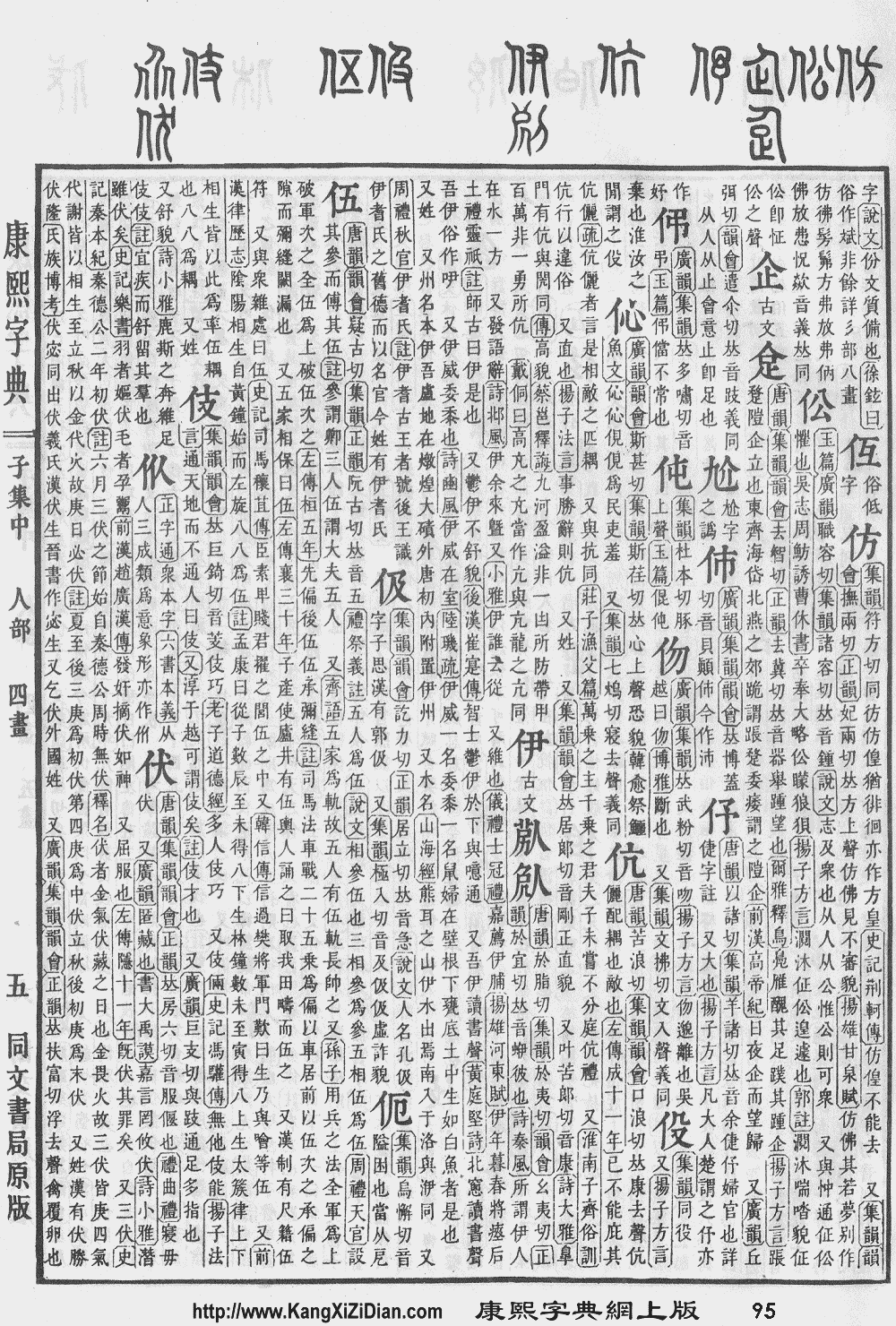
  • Kangxi Dictionary: page 95, character 21
  • Dai Kanwa Jiten: character 436
  • Dae Jaweon: page 202, character 5
  • Hanyu Da Zidian (first edition): volume 1, page 119, character 2
  • Unihan data for U+4F0E

Chinese

Lua error in Module:utilities at line 142: attempt to perform arithmetic on local 'h' (a nil value)

Glyph origin

Historical forms of the character
Shuowen Jiezi (compiled in Han) Liushutong (compiled in Ming)
Small seal script Transcribed ancient scripts


References:

Mostly from Richard Sears' Chinese Etymology site (authorisation),
which in turn draws data from various collections of ancient forms of Chinese characters, including:

  • Shuowen Jiezi (small seal),
  • Jinwen Bian (bronze inscriptions),
  • Liushutong (Liushutong characters) and
  • Yinxu Jiaguwen Bian (oracle bone script).

Phono-semantic compound (形聲形声, OC *kjes, *ɡe, *ɡreʔ) : semantic (person) + phonetic (OC *kje).

Pronunciation 1


Rime
Character
Reading # 2/3
Initial () (30)
Final () (13)
Tone (調) Rising (X)
Openness (開合) Open
Division () III
Fanqie
Baxter gjeX
Reconstructions
Zhengzhang
Shangfang
/ɡˠiᴇX/
Pan
Wuyun
/ɡᵚiɛX/
Shao
Rongfen
/ɡiɛX/
Edwin
Pulleyblank
/gjiə̆X/
Li
Rong
/ɡjeX/
Wang
Li
/ɡǐeX/
Bernard
Karlgren
/gie̯X/
Expected
Mandarin
Reflex
Expected
Cantonese
Reflex
gei6
BaxterSagart system 1.1 (2014)
Character
Reading # 1/1
Modern
Beijing
(Pinyin)
Middle
Chinese
‹ gjeX ›
Old
Chinese
/*[ɡ]reʔ/
English skill

Notes for Old Chinese notations in the Baxter–Sagart system:

* Parentheses "()" indicate uncertain presence;
* Square brackets "[]" indicate uncertain identity, e.g. *[t] as coda may in fact be *-t or *-p;
* Angle brackets "<>" indicate infix;
* Hyphen "-" indicates morpheme boundary;

* Period "." indicates syllable boundary.
Zhengzhang system (2003)
Character
Reading # 3/3
No. 17231
Phonetic
component
Rime
group
Rime
subdivision
0
Corresponding
MC rime
Old
Chinese
/*ɡreʔ/

Definitions

  1. (literary) Alternative form of (, skill)
       liǎng   underhanded trick; dishonest tactic
  2. (historical) performer, especially female entertainers whose profession involved singing and dancing, in ancient China
  3. companion

Compounds

  • 伎倆伎俩 (jìliǎng)
  • 伎坊
  • 伎癢伎痒
  • 伎館伎馆
  • 司空伎倆司空伎俩
  • 坐部伎
  • 女伎
  • 家伎 (jiājì)
  • 展伎
  • 故伎重演
  • 敏於伎敏于伎
  • 本等伎倆本等伎俩
  • 材伎
  • 歌伎 (gējì)
  • 歌舞伎 (gēwǔjì)
  • 油花伎倆油花伎俩
  • 繩伎绳伎
  • 薄伎
  • 鬼蜮伎倆鬼蜮伎俩
  • 鬼魅伎倆鬼魅伎俩

Pronunciation 2


Rime
Character
Reading # 1/3
Initial () (30)
Final () (11)
Tone (調) Level (Ø)
Openness (開合) Open
Division () III
Fanqie
Baxter gjie
Reconstructions
Zhengzhang
Shangfang
/ɡiᴇ/
Pan
Wuyun
/ɡiɛ/
Shao
Rongfen
/ɡjɛ/
Edwin
Pulleyblank
/giə̆/
Li
Rong
/ɡie/
Wang
Li
/ɡǐe/
Bernard
Karlgren
/gie̯/
Expected
Mandarin
Reflex
Expected
Cantonese
Reflex
kei4
Zhengzhang system (2003)
Character
Reading # 2/3
No. 17227
Phonetic
component
Rime
group
Rime
subdivision
0
Corresponding
MC rime
Old
Chinese
/*ɡe/

Definitions

  1. Only used in 伎伎.

Pronunciation 3


Rime
Character
Reading # 3/3
Initial () (23)
Final () (11)
Tone (調) Departing (H)
Openness (開合) Open
Division () III
Fanqie
Baxter tsyeH
Reconstructions
Zhengzhang
Shangfang
/t͡ɕiᴇH/
Pan
Wuyun
/t͡ɕiɛH/
Shao
Rongfen
/t͡ɕjɛH/
Edwin
Pulleyblank
/ciə̆H/
Li
Rong
/t͡ɕieH/
Wang
Li
/t͡ɕǐeH/
Bernard
Karlgren
/t͡ɕie̯H/
Expected
Mandarin
Reflex
zhì
Expected
Cantonese
Reflex
zi3
Zhengzhang system (2003)
Character
Reading # 1/3
No. 17208
Phonetic
component
Rime
group
Rime
subdivision
0
Corresponding
MC rime
Old
Chinese
/*kjes/

Definitions

  1. Alternative form of (zhì)

Pronunciation 4


Definitions

  1. Alternative form of 𢺵

Japanese

Kanji

(common “Jōyō” kanji)

  1. deed
  2. skill

Readings

Lua error in Module:utilities at line 142: attempt to perform arithmetic on local 'h' (a nil value)

Compounds

Korean

Hanja

• (gi) (hangeul , revised gi, McCuneReischauer ki)

  1. This term needs a translation to English. Please help out and add a translation, then remove the text {{rfdef}}.

Vietnamese

Han character

: Hán Nôm readings:

  1. This term needs a translation to English. Please help out and add a translation, then remove the text {{rfdef}}.
This article is issued from Wiktionary. The text is licensed under Creative Commons - Attribution - Sharealike. Additional terms may apply for the media files.